How to Report Royalty Income on Schedule E
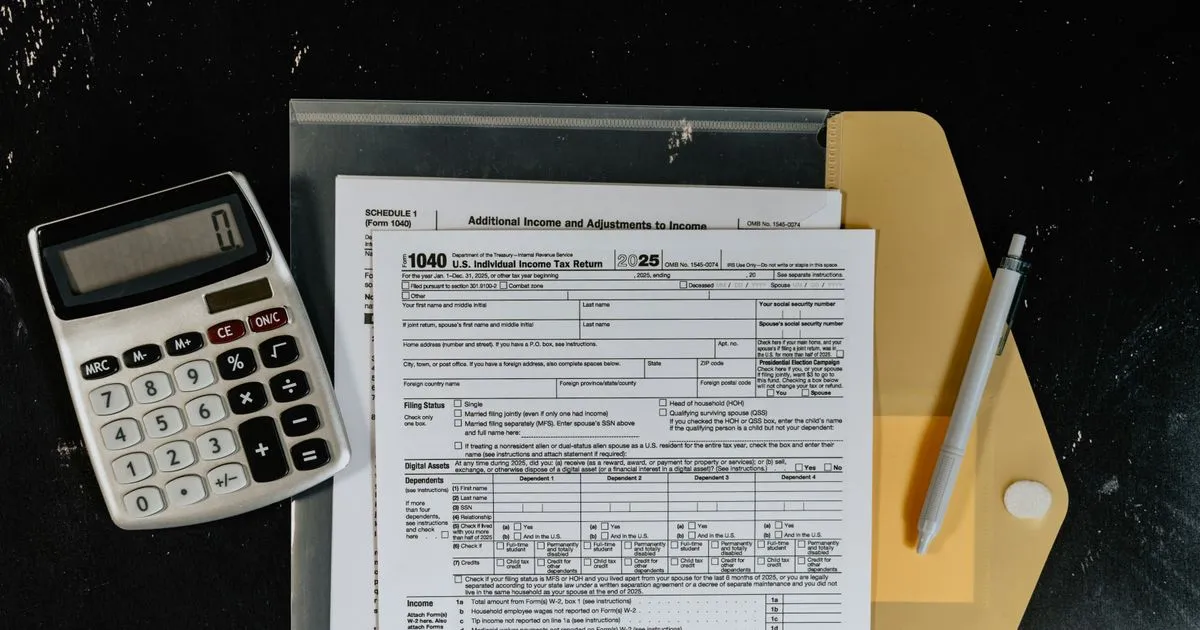
If you receive royalty income from mineral rights, you report it on Schedule E (Supplemental Income and Loss) of your federal tax return. It's not as complicated as it looks, but there are a few things to get right.
This is a general overview, not tax advice. Work with a tax professional for your specific situation.
What Goes on Schedule E
Schedule E, Part I is where you report income and expenses from royalties. For each property (or group of properties), you'll report:
- Gross royalty income: the total royalties you received during the year, before deductions. This should match the total on your 1099-MISC forms.
- Deductible expenses: costs you can deduct against that income.
- Depletion: either percentage or cost depletion, whichever is larger.
The net result (income minus expenses minus depletion) is your taxable royalty income, which flows to your Form 1040.
Where the Numbers Come From
1099-MISC: Operators send you a 1099-MISC (Box 2: Royalties) showing the total royalties paid to you during the year. The IRS requires reporting for royalty payments of $10 or more. Importantly, the 1099 should show gross royalty payments before reduction for severance and other taxes. If you receive payments from multiple operators, you'll get a 1099 from each one.
Check stubs: Your check stubs show the detail behind the 1099 totals. If you need to break income down by property, or if you need to identify deductions that the operator already took, the stubs are your source.
Your records: Your running log of payments, deductions, and expenses throughout the year. This is where keeping records for seven years pays off.
Common Deductible Expenses
The IRS allows you to deduct all ordinary and necessary expenses incurred to maintain or manage your mineral interests. Common ones include:
- Ad valorem (property) taxes paid on mineral interests (these are annual taxes collected at the county level based on the assessed value of the minerals)
- Legal fees related to the minerals (lease review, title work, attorney consultations)
- Accounting fees for preparing the mineral portion of your tax return
- Travel expenses if you need to visit the property for management purposes
- Post-production costs not already deducted by the operator (this depends on your lease terms and how the operator handles deductions)
Production taxes and other revenue deductions shown on your 1099-MISC, along with other expenses you incur, should be shown on Schedule E under Expenses.
Depletion
Depletion gets its own line on Schedule E. You calculate both percentage depletion and cost depletion and use whichever is larger. Recognizing that oil, gas, and other minerals are used up as they are extracted, the IRS allows a reasonable deduction based on depletion of the mineral resource. This is one of the biggest tax benefits available to mineral owners, so it's worth getting right.
What About State Taxes Withheld?
If a state withheld severance taxes or income taxes from your royalty payments, those appear on your check stubs. State severance taxes are generally deductible on Schedule E as an expense against your royalty income. State income taxes withheld are handled separately (they may be deductible on Schedule A as state income taxes paid, subject to the $40,000 SALT cap for most filers, raised from $10,000 by the One Big Beautiful Bill Act effective 2025).
Multiple Properties
If you own interests in more than three properties, you'll need additional copies of Schedule E (the form has space for three properties per page). Each property should be reported separately so you can track income and expenses by property.
Alternatively, some CPAs group all mineral interests as a single "activity" if the properties are in the same state and have similar characteristics. Ask your tax professional what approach they recommend.
Schedule E vs. Schedule C
This is an important distinction. Royalty income goes on Schedule E. Working interest income (where you participate in well costs and have operating responsibility) may go on Schedule C and is subject to self-employment tax of 15.3%. Schedule E royalty income avoids self-employment tax entirely. Know which type of interest you have.
Common Mistakes
- Not reporting gross income. Some owners report only the net amount from their check (after operator deductions) as gross income, then have nothing to deduct. Report the gross royalty income as shown on your 1099, and take allowable deductions and depletion against it.
- Forgetting depletion. This is free money you're leaving on the table.
- Not keeping 1099s. The IRS receives a copy of every 1099. If your reported income doesn't match, expect a notice.
- Mixing up Schedule E and Schedule C. If you have a royalty interest, it goes on Schedule E. Only working interests with operating responsibility go on Schedule C.
Keep Good Records
The best thing you can do for tax season is keep records throughout the year. MinRight lets you log each royalty payment as it arrives with the full breakdown of income, deductions, and taxes. When April comes around, you have every number organized by property and well instead of reconstructing a year's worth of income from a stack of check stubs.
For more on depletion calculations, understanding your stepped-up basis, and how long to keep your records, see our other tax-related posts.