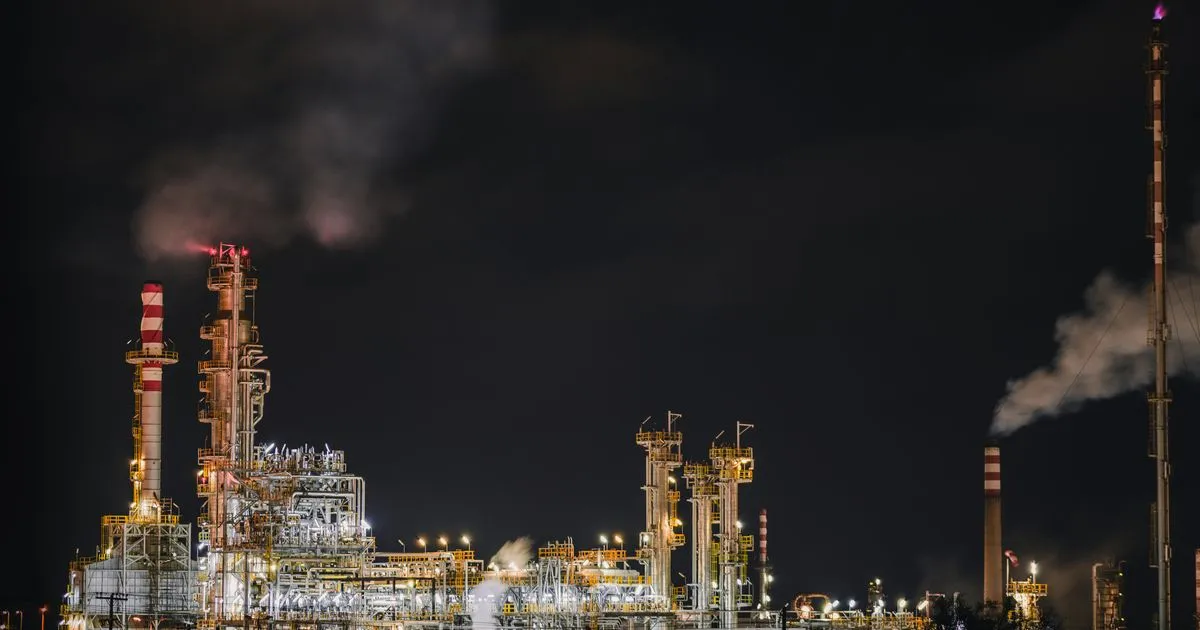
The Oil and Gas Supply Chain: Wellhead to Refinery
When you see line items on your royalty check stub for gathering, transportation, processing, and marketing, each one represents a physical step in moving oil and gas from the wellhead to the end buyer. Understanding the supply chain explains why those deductions exist and what you're paying for.
At the Wellhead
Production comes out of the ground as a mix of crude oil, natural gas, water, and sometimes sand or other solids. At the well site, basic separation occurs:
- Oil goes to a tank battery (a set of storage tanks on the lease)
- Gas enters a gathering line
- Water is separated and sent to disposal (usually injected into a permitted disposal well)
The wellhead is "point zero." If your lease calculates royalties "at the wellhead," your gross royalty is based on the value of production right here, before any costs of moving or processing it.
Gathering
Gathering is the first step of transportation. Small-diameter pipelines (gathering lines) collect oil and gas from individual wells and bring them to a central collection point or a larger pipeline.
Gathering systems are built and operated by midstream companies, not by the producer. The fee they charge shows up as the "gathering" deduction on your check stub. In some areas with limited infrastructure, gathering costs can be significant.
Transportation
From the gathering system, oil moves by pipeline or truck to a larger pipeline hub, a rail terminal, or directly to a refinery. Gas moves by pipeline to a processing plant or directly into a transmission pipeline.
Transportation costs depend on distance and infrastructure. A well located near a major pipeline hub pays less for transportation than a well in a remote area. The "transportation" deduction on your check stub covers this leg of the journey.
Processing
Natural gas often needs processing before it can be sold. Raw gas may contain:
- Natural gas liquids (ethane, propane, butane, natural gasoline) that are more valuable when separated and sold individually
- Impurities (hydrogen sulfide, carbon dioxide, nitrogen, water vapor) that must be removed to meet pipeline specifications
A gas processing plant separates the NGLs from the methane and removes impurities. The resulting "residue gas" (clean methane) enters the transmission pipeline, and the NGLs are sold separately.
The "processing" deduction on your check stub pays for this step. If your well produces dry gas with few liquids, processing costs are low. If it produces wet gas rich in NGLs, processing costs are higher but the NGL revenue helps offset them.
Marketing
Someone has to find a buyer and negotiate the sale price. For oil, this might be a refinery, a trading company, or a pipeline purchaser. For gas, it might be a utility, an industrial user, or a gas marketer.
The "marketing" deduction covers the cost of arranging these sales. In some cases, the operator handles marketing in-house. In others, a third-party marketer earns a fee or a margin on each transaction.
Refining (Oil)
Crude oil goes to a refinery where it's processed into gasoline, diesel, jet fuel, heating oil, lubricants, and petrochemical feedstocks. By this point, the oil is far from your wellhead and you've already been paid. Refining costs are not deducted from your royalty.
End Use (Gas)
Natural gas flows through transmission pipelines to local distribution companies, power plants, industrial facilities, and eventually homes and businesses. Like refining, these downstream costs don't affect your royalty.
Why It Matters
Every step from the wellhead to the market costs money, and depending on your lease, some of those costs may be deducted from your royalty. Understanding the physical chain helps you:
- Make sense of the deduction categories on your check stub
- Evaluate whether deductions are reasonable
- Understand why production in remote areas has higher deductions than production near major infrastructure
- Negotiate lease terms that limit which costs can be deducted