How an Oil and Gas Well Is Drilled and Completed
If you own mineral rights and a well is being drilled on your property, you might wonder what's actually happening out there. The process has several distinct phases, each with its own timeline, cost, and purpose. A typical Marcellus shale well costs $6 to $10 million to develop from start to finish.
Permitting
Before anything happens on the ground, the operator files for a drilling permit with the state oil and gas commission. The permit specifies the well location, target formation, proposed depth, and other technical details. The state reviews the application, checks spacing requirements, and either approves or denies the permit.
Timelines vary by state. Texas processes standard permits in about four business days, while federal permits from the BLM require NEPA review and can take months.
Site Preparation
Once permitted, the operator prepares the well site. This includes building an access road, leveling a pad, constructing a reserve pit for drilling fluids, and setting up the equipment. For horizontal wells in active areas, the pad may be designed to accommodate multiple wells.
Drilling
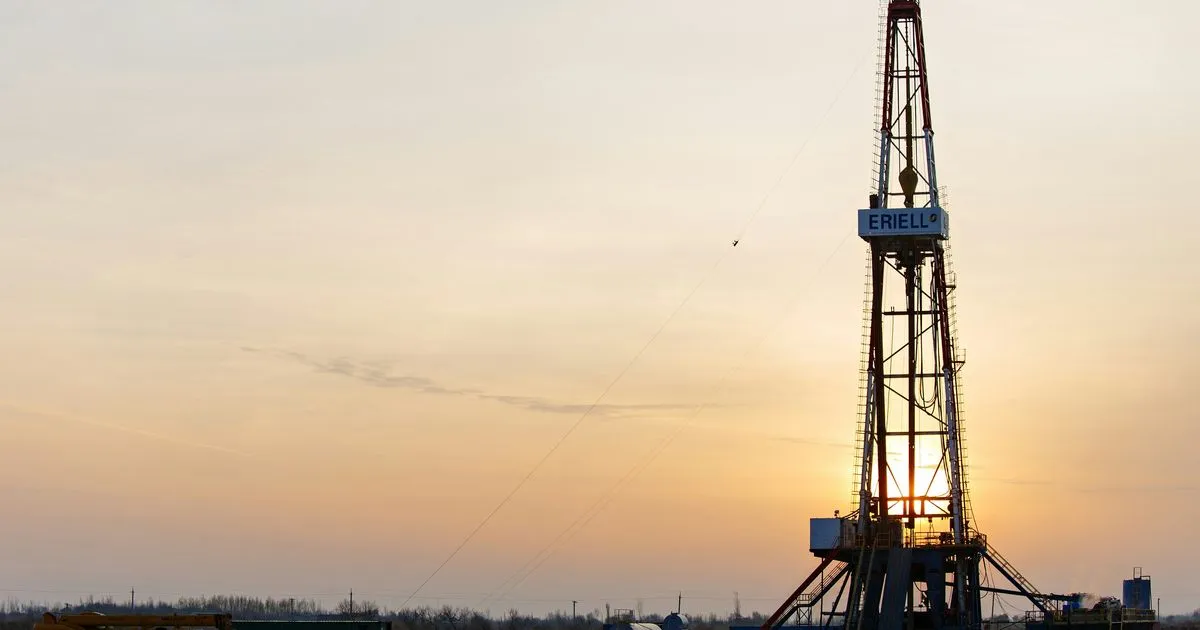
A drilling rig is moved to the location and the actual drilling begins. Specialized rigs can cost $50,000 per day or more to lease, and drilling runs 24 hours a day, seven days a week.
Surface hole. The first section is drilled to a relatively shallow depth (typically 500 to 1,000 feet). A steel casing (often 13¾ inches in diameter) is cemented in place to protect freshwater aquifers from contamination.
Intermediate hole. Additional sections may be drilled and cased through unstable or high-pressure zones. In the Marcellus, intermediate casing is typically set around 2,000 feet.
Production hole. The final vertical section is drilled to the target depth. For a vertical well, this is where drilling stops. For a horizontal well, the drill bit is gradually turned from vertical to horizontal, then drilled laterally through the target formation. Modern horizontal laterals can extend several thousand to upwards of 20,000 feet, with industry trends favoring longer laterals for increased productivity.
Drilling a single well takes roughly three to four weeks of continuous operation.
Completion
After drilling, the well must be "completed" before it can produce. Completion is the process of preparing the wellbore for production.
Casing and cementing. Production casing is run the full length of the well and cemented in place. Cement must set for a minimum of eight hours and reach 1,200 psi compressive strength within 72 hours before the next operations can proceed.
Perforating. Small explosive charges create holes in the casing at the target formation depth, allowing oil and gas to flow into the wellbore.
Hydraulic fracturing. In most modern wells, especially horizontal shale wells, the formation is fractured to create pathways for oil and gas to flow. Water, sand, and chemicals are pumped at high pressure to crack the rock. This is done in stages along the lateral. Hydraulic fracturing alone can cost $3 to $5 million per well.
Completion can cost as much or more than drilling, especially in horizontal wells with many frac stages.
Flowback and Initial Production
After completion, the well is opened and begins flowing. The first period produces a mix of fracturing fluids, formation water, and hydrocarbons. This "flowback" period transitions into regular production over days to weeks.
Initial production (IP) rates are typically the highest the well will ever achieve. Operators report IP rates to the state, and these numbers are often used to evaluate the quality of a well. From there, production follows a predictable decline curve.
Production
Once the well is producing steadily, it enters its production phase. Oil, gas, and water are separated at the surface. Oil goes to a tank battery for trucking or into a pipeline. Gas goes into a gathering system. Water is disposed of, usually by injection into a permitted disposal well.
The operator monitors the well, maintains the equipment, and reports production volumes to the state. You can look up these volumes through state commission websites. Your royalty payments are calculated from these production numbers based on your decimal interest and the terms of your lease.
What This Means for Your Royalties
You won't see royalty income immediately. Between permitting, drilling, completion, and the time it takes to set up sales contracts and process division orders, the first royalty check may arrive 4 to 6 months after the well starts producing. For more on that timeline, see our post on the production-to-payment delay.